
About fifteen years ago, Leon Patillo released a beautiful praise song called Star of the Morning. I still absolutely love that song. I admit that at the time the song was released, I was not studying the Bible with nearly as much intention as I do now. Furthermore, until recently I avoided studying the book of Revelation because let’s face it, Revelation has some weird stuff in it. It’s difficult, if not impossible, to thoroughly understand. Imagine my surprise and discomfort when I was trying to figure out what Scripture says about Satan’s fall and I came across these verses in Isaiah:
“How you have fallen from heaven,
You star of the morning, son of the dawn!
You have been cut down to the earth,
You who defeated the nations!
But you said in your heart,
‘I will ascend to heaven;
I will raise my throne above the stars of God,
And I will sit on the mount of assembly
In the recesses of the north.
I will ascend above the heights of the clouds;
I will make myself like the Most High.’
Nevertheless you will be brought down to Sheol,
To the recesses of the pit.” (Is 14:12-15 NASB20)
Suddenly, I remembered the worship song I loved, and nearly panicked because I started wondering exactly whom I had been worshiping when I sang that song. The words in the Leon Patillo song very clearly point to Jesus, but I didn’t know if Scripture actually referred to Jesus as the Star of the Morning. Instead, I had discovered a passage that many scholars believe refers to Satan (as well as the king of Babylon whom Isaiah was directly describing), and the exact same name was used! I certainly didn’t want to sing that song anymore if “Star of the Morning” was a name for Satan! Fortunately, my investigations eventually showed me that Mr. Patillo was perfectly on point when he used the term “Star of the Morning” as a name for Jesus in his song.
In fact, in the book of Revelation, Jesus refers to himself as the “bright morning star” (Rev 22:16). This is a name that first century Christians and Jews would have recognized. There is a messianic prophecy in the Old Testament that describes the coming Messiah as a star. Remember the narrative in Numbers 22-24 in which Balak, the king of Moab, summoned Balaam to curse the Israelites, but God causes Balaam to bless Israel instead? In Balaam’s final oracle, he announces that “a star shall come out of Jacob, and a scepter shall rise out of Israel,” and this star/scepter will crush the enemies of Israel (Num 24:17).1[1]

Interestingly this theme of a star with the authority to crush enemy nations is found again in Revelation 2. In the letter to the church at Thyatira, Jesus promises that the one who continues to obey and do His works will receive “authority over the nations, and he will rule them with a rod of iron…and I will give him the morning star” (Rev 2:28). In his discussion of the letter to Thyatira, G. K. Beale explains that the star from Num 24:17 likely inspired the “morning star” from Rev 2:28, and “the ‘morning star’ is a symbol associated with the messianic reign.”2[2]
That the star is a “morning” star is also noteworthy. A morning start heralds the beginning of a new day. Prior to Jesus referring to himself as the “bright morning star” in Rev 22:16, John saw a beautiful vision of the New Heaven and the New Earth (Rev 21:1-22:5). However, at the moment we are still living in the old, fallen earth. We are in the “now and the not yet.” We know that victory is won and death has been conquered through Jesus’s atoning work on the cross, but we are still waiting for Jesus to come back, bringing the New Heaven and the New Earth with Him. But … a new day dawned when Jesus rose from the grave and ascended into heaven. As the bright morning star, “Christ has begun a new redemptive day, which he will culminate at his final return.”3[3]
Peter also uses the term “morning star” in his second letter. As he is exhorting his readers to recognize the truth of the eyewitness accounts and to hold fast to the gospel, he urges the readers to “pay attention as to a lamp shining in a dark place, until the day dawns and the morning star rises in your hearts” (2 Pet 1:19). Similar to the use of this term in Revelation 22, Beale suggests that Peter’s use of this term is a metaphor “for the inauguration of the OT ‘prophetic word’ in Christ’s first coming.”4[4]
So, we can certainly see how the name “bright morning star” refers to Jesus. But why does Isaiah use “star of the morning” in such a negative light, and does it really refer to Satan in Isaiah’s prophecy? First, let’s review a few things about biblical prophecy. Often, Old Testament prophecy is recognized as having a “distant” fulfillment far off in the future, as well as the more obvious “near” fulfillment appropriate to the prophet’s historical context. However, we also have to understand that the prophet was merely relaying the message God gave to him. Many of the prophecies that are understood to be overtly messianic to modern readers, such as Is 9:1-7, were written when Israel and/or Judah were under great threat. At the time the prophecy was given, the original audience would have understood the prophecy within the context of their immediate circumstance. Christians today have the benefit of knowing the full story of the crucifixion and resurrection, which makes it much easier to recognize the messianic nature of an OT prophecy and how the prophecy might relate to the progressive revelation of the gospel story. Andrew Hill and John Walton describe this “near and far fulfillment” concept well:
“Prophecy as the word of God was expected to be appropriate to numerous situations as history unfolded. In other words, only time would tell how appropriate a prophetic statement might be. It had an obvious appropriateness to the contemporary audience, but there was no thought that its fitness was exhausted on the contemporary situation. Hindsight would come into play in order to identify other emerging appropriatenesses. Neither the prophet nor the audience had any confidence in being able to anticipate what form a future appropriateness might take. Such an insight could only come by revelation.”5[5]
Now, back to Isaiah. According to Is 1:1, Isaiah prophesied “in the days of Uzziah, Jotham, Ahaz, and Hezekiah, kings of Judah.” During the reign of Hezekiah, the northern kingdom of Israel fell to Assyria (2 Kings 17:6). As Assyria was wreaking havoc, Babylon’s power was growing as well. We see this in the interaction between Hezekiah and the Babylonian envoys in 2 Kings 20:12-19. Isaiah’s prophecies covered many topics, all set within the context of the looming threats from Assyria and Babylon. Although the prophet spoke about the wickedness of Judah and the need for God’s people to repent (see Is 1:2-20 for an example), he also prophesied about the faithful remnant who continued to worship Yahweh, and the ultimate downfall of the enemies of God and His people. Isaiah 13:1-14:22 is essentially a vision showing the future judgment and destruction of Babylon. Isaiah 14:3-21 is a lengthy “taunt” hurled at the king of Babylon by the remnant of faithful Israelites within the greater prophecy concerning the fall of Babylon. Some of the language attributed to the Babylonian king within this prophetic passage seems a bit over-the-top, even for the king of Babylon. Consider Is 14:14, “I will ascend above the heights of the clouds; I will make myself like the Most High.” The Hebrew word translated as “Most High” is לעליון (‘elyôn), a name consistently used for God (see Gen 14:18-22, Deut 32:8 among others). The Babylonians were a polytheistic society whose most powerful god was Marduk.6[The Babylonian king probably wouldn’t choose the Hebrew God as the ultimate height of power. The language in this passage seems to suggest that there might be a “distant” fulfillment to this prophecy as well as the more immediate fall of the Babylonian king. Wayne Grudem concurs as he states that the language in this passage “seems too strong to refer to any merely human king” and “strongly suggests a rebellion by an angelic creature of great power and dignity.”7[Isaiah 14:15 may therefore represent the fall of this rebellious angelic creature, namely Satan.
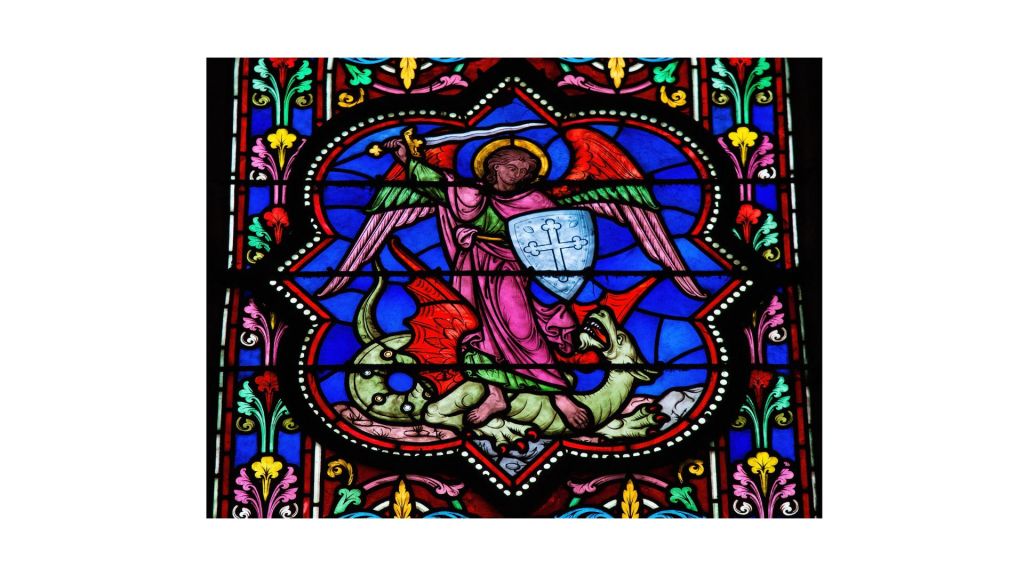
But why the term Star of the Morning, regardless of whether it refers to the Babylonian king, to Satan, or to both? Ian Paul explains that the imagery of a star held the sense of an “anointed one” or “ruler” in both Jewish and Roman thought.8 As ancient rulers were considered to be “anointed” (see 1 Sam 15:17), this would certainly apply to the Babylonian king. However, Satan seems to be in a position of leadership over his demons as well. We see him as the primary accuser of Job in Job 1:6-2:7, and probably the accuser of the divine courtroom scene in Zech 3:1-10 as well.9[Furthermore, Satan is called the “ruler of this world” in John 12:31. Therefore, using the term “star” in reference either to the king of Babylon or to Satan may merely represent an image of ruling authority.
Fortunately, we know the One who has ultimate authority. We serve the true Bright Morning Star, the One who defeated sin and then “sat down at the right hand of God, waiting from that time until his enemies should be made a footstool for his feet” (Heb 10:12b-13). Satan may disguise himself as an angel of light (2 Cor 11:14), but Jesus himself told his disciples that he “saw Satan fall like lightning from heaven” (Luke 10:18). Jesus, the Bright Morning Star is the true light of the world who gives the light of life to those who follow Him (John 8:12). As Christians, we look forward to the day when He returns and brings a brand-new day, the “dawn of the promised new creation of God.”10[Until then, just as Peter urged his readers, may we hold tightly to the Word of God and “pay attention as to a lamp shining in a dark place, until the day dawns and the morning star rises in our hearts” (2 Pet 1:19).
[1] 1Unless otherwise noted, all Scripture references are from the ESV.
[2] 2G. K. Beale, The Book of Revelation, NIGTC, eds. I. Howard Marshall and Donald A. Hagner (Grand Rapids: Eerdmans, 1999), 269.
[3] 3Ibid., 1147
[4] 4Ibid.
[5] 5Andrew E. Hill and John H. Walton, A Survey of the Old Testament (Grand Rapids: Zondervan, 2009), 515.
[6] 6Ibid., 79.
[7]7 Wayne Grudem, Systematic Theology, 2nd ed, (Grand Rapids: Zondervan, 2020), 534.
[8] 8Ian Paul, Revelation,TNTC, eds. Eckhard J. Schnabel and Nicholas Perrin, (Downers Grove, IL: IVP Academic, 2018), 97.
[9] 9The Hebrew word שטן (satan) merely means “accuser.” This word was not transliterated into a proper name for the devil until New Testament times.
[10] 10Paul, 97.
 seekinghimaboveallelse.com
Leave a comment